· 7 min read
My Startup Journey: Sugar Technology and RapidRender
From early-stage startup to scale-up: how a small team built a 3D design and render platform for furniture showrooms, and what I learned without AI tools.
I joined Sugar Technology when it was five people and left when it was twenty-five. In two and a half years, in an engineering team of three, we built one real product and three prototypes. The product, RapidRender, is a 3D design and render platform that Turkey's biggest furniture brands use in their stores, and it sold more than 2,000 licences while I was there.
I worked across the whole stack: the app, the back office, the backend and the cloud. I also sat in the meetings where we decided what to build. And for the first two years, I did my part without AI tools. This post is what we built, what I owned in it, how a small team shipped it, and why learning that way still matters to me.
Joining a five-person startup in an Istanbul incubator
When I joined, we worked from a startup centre in Fulya, Istanbul. The company was looking for more funding, so every week counted. There was no room for anyone who only waited for tickets.
Engineering was three of us, and I worked shoulder to shoulder with the co-founder and CTO, an engineer with more than a decade in enterprise software. He showed me what professional engineering looks like, and I learned more perspectives from him than from anyone else.
What RapidRender does
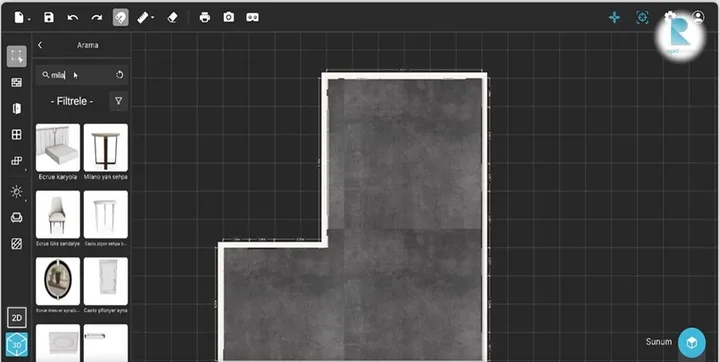
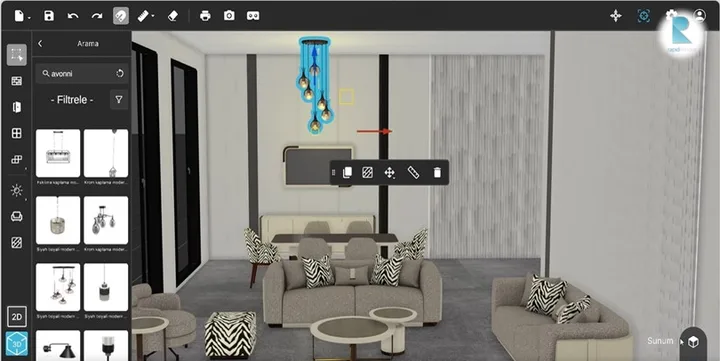
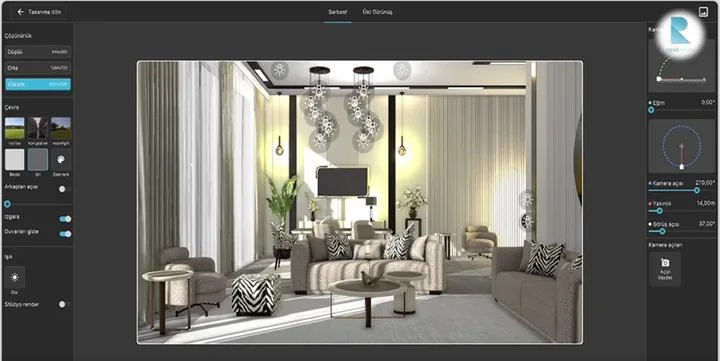
RapidRender is a business-to-business platform for interior design. A designer imports or draws a floor plan, raises the walls, furnishes the room with real products and renders it in seconds. Furniture showrooms use it to show customers their room before they buy.
What makes it work is the catalogue. Every product is a digital twin: a 3D model with its real materials and textures, made by our 3D artists from the manufacturer's data. Today the catalogue has more than 120,000 real products from more than 90 manufacturers, and the app reaches a network of more than 1,600 stores. İstikbal and Bellona, two of the biggest furniture brands in Turkey, use it in theirs.
We built it for businesses first. Selling to consumers was a later option, so every early decision favoured what a showroom needs: speed, real products and quotes.
- Floor plan
- 3D design
- Render
What I worked on across the stack
With three engineers, there's no one else to hand the work to, so I worked on four layers.
The app: one editor on four platforms
The editor runs on Android, iOS, macOS and Windows from one codebase. I built tools in it, from drawing and moving objects to the render screen, and I made each one hold up on a phone as well as a desktop. When we needed to ship the desktop app to customers, I learned enough Pascal, a language older than I am, to write its installer.
The back office: where the catalogue lives
Customers only see the editor, but most of the product's value sits in the back office. I built and extended the internal tools behind it:
- Catalogue management: products, variants, materials and categories, plus bulk import from spreadsheets so a manufacturer's whole range could go in at once.
- Render management: the screens that track renders and manage the servers that make them.
- Reports for manufacturers: which products designers click, how each dealer uses the app, and reports emailed on a schedule.
- Operations: error logs and in-app notifications, so we heard about problems before customers told us.
The backend: services, data and pipelines
Behind both sit more than one hundred API endpoints and background jobs, which I built and ran with the team. I designed large database schemas for products, materials, companies and users, and wrote many of the endpoints the app and back office call.
Rendering and image processing don't fit in a normal request, so I improved the asynchronous pipelines that queue the work, run it and report back. I also automated our cloud deployments, so a release was a routine step, not a risky afternoon.
The heavy part: 3D models and textures
Digital twins are big. A single product brings a 3D model and several high-resolution textures, and the catalogue has more than 120,000 of them. We kept these files in cloud storage and served them through a content delivery network, so a designer in a showroom gets the sofa they picked in seconds, not minutes.
The AI assistant
Near the end, I built an AI chat agent inside the app. You tell it what you want in plain language, and it turns the request into actions in the editor. It ran on a large language model provider's API, and most of the work was in the part around the model: deciding which actions it may take and checking what it asks for before the app does it.
Three prototypes beside the product
RapidRender was the one real product. Beside it, we built three proofs of concept, small prototypes to test an idea before anyone committed to it:
| Prototype | What it was | What I learned |
|---|---|---|
| Cabinet Configurator | Design a cabinet from doors to shelves, in the browser or in VR, and get a quote | Turning a configuration into a price |
| Mixed Reality | Place virtual furniture in a real room scanned by a headset | Working with the real world as input |
| Metaverse | A multiplayer shopping mall with avatars and virtual shops | My first real-time system, built on WebSockets |
The Metaverse prototype was where I first met WebSockets, a way to keep a live connection open between browser and server. I use the same idea today for live multiplayer on my own card games site.
More than code: product decisions
I wasn't only handed tasks. I sat in the brainstorming meetings where we decided what to build next, and my part was usually the engineering view. I'd say what a feature would really cost and argue for the order to build things in.
Most of my influence was on priorities and on how to build: which approach to take, where a feature should live in the architecture, and what to leave out. Features also changed with the customers we were about to sign. When a big brand needed something to say yes, we reshaped the plan around it.
Part of my pay was tied to sales, so I cared about what sold, not just what shipped.
How we shipped
We planned one week at a time, two at most, on a shared task board. Short plans suited a startup: when something urgent came in, we changed the priorities and moved on. Features that a deal depended on moved fastest.
Every release went through the same steps:
- Build and test in a test environment with its own database, separate from production.
- Manual testing: our internal testers went through a checklist one item at a time.
- Go live only when every item passed.
Urgent fixes went out as soon as they were ready. Regular releases followed the features: when a feature was done and tested, it shipped.
Building without AI, and why it still matters
For my first two years at the company, I wrote all my code by hand. There were no AI coding tools in my workflow. In my last six months a few arrived, but they weren't good yet; nothing could take a task and work through a codebase alone.
So I learned the slow way. I read the documentation, read other people's code, and found bugs by reproducing them and following the data until it went wrong. When a render failed, I couldn't ask a tool why. I had to know the system well enough to work it out.
I'm grateful for that now. I use AI tools every day, and they're fast. But they write code that someone still has to read, question and own when it breaks in production. Two years of building without them is why I can do that part: I know what good code looks like, I spot when generated code is wrong, and I can debug what I didn't write. That's the part of the job AI hasn't taken.
A full-time job and a full-time master's
In my last months at Sugar Technology, I moved to London for a full-time MSc in Computer Science and kept my full-time job, working remotely. For about eight months I did both at once. Managing a full-time job and a full-time degree together was hard, but I graduated with distinction.
When the degree ended, the company wanted me back in Istanbul. I chose to stay in London, because I knew I'd grow more here. Leaving a product I'd worked on for years wasn't easy, but RapidRender kept growing without me, which is what you want from something you helped build.
What I took from it
- Small teams teach you the whole product. With three engineers, there's no one else to hand the database, the deployment or the installer to. That's the fastest way to learn how it all fits together.
- Ship in short loops. One- or two-week plans, a test environment and a checklist were enough to ship safely to big customers.
- Learn the hard way once. Two years without AI taught me to own code. Today AI makes me faster, but that foundation is why I can trust what I ship.
If I did it again, I'd write more down: decisions, trade-offs and numbers, as they happened. Most of what I learned is in my head, not in a document anyone else can read.
Today I work as a full-stack engineer in London. You can see the projects from those years in my archive, and find me on LinkedIn.