· 4 min read
Why I Sign My Projects With a Tughra, Not “Built by”
I replaced “Designed by Tugrul Subekci” with a seal: my name in Orkhon runes, drawn as an Ottoman tughra. Why runes, why a heptagon, and how you can make one.
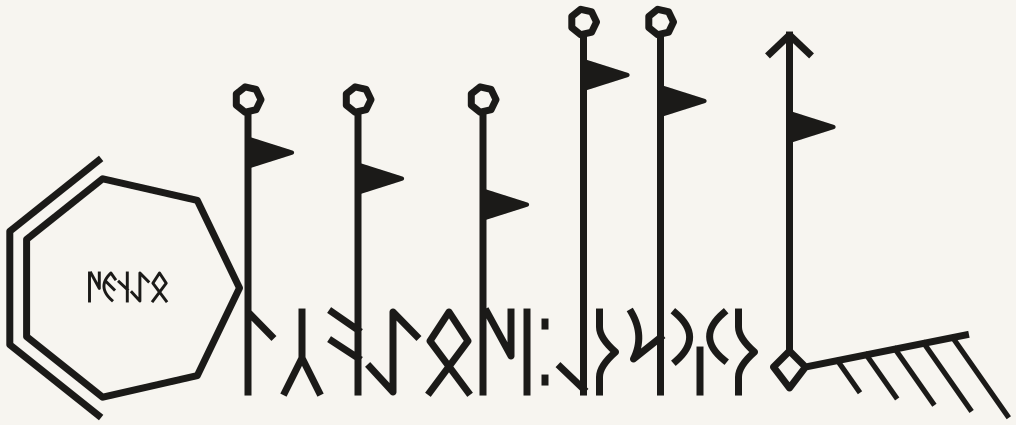
The footer of my site no longer says "Designed by Tugrul Subekci". It carries a seal instead: my name written in Orkhon runes, the alphabet of the 8th-century Göktürk inscriptions, and drawn the way Ottoman sultans had their names drawn as a tughra. I built a tughra maker to draw it, and anyone can type their own name into it and share the result.
It took eight days, from a first sketch to shareable links. This post is about why I made it, what I threw away on the way, and why a heptagon sits on its left.
Why isn't "Built by" enough?
Every personal project I've made ended the same way, with "Designed by Tugrul Subekci" or "Built by Tugrul Subekci" in the footer. Everyone does it. It tells you who made the thing, and nothing else: it's a label, not a signature.
I wanted a sign that was mine. Then I remembered something from history lessons at school: Ottoman sultans didn't sign their decrees with a name, they signed them with a tughra.
What is a tughra?
A tughra (Turkish tuğra) is a sultan's signature drawn as a single emblem. A court calligrapher designed one at the start of each reign. It headed every decree and treaty and was struck on the coins. The office that drew it reaches back to the chancery of Tuğrul Bey, the founder of the Seljuk dynasty, and my namesake.
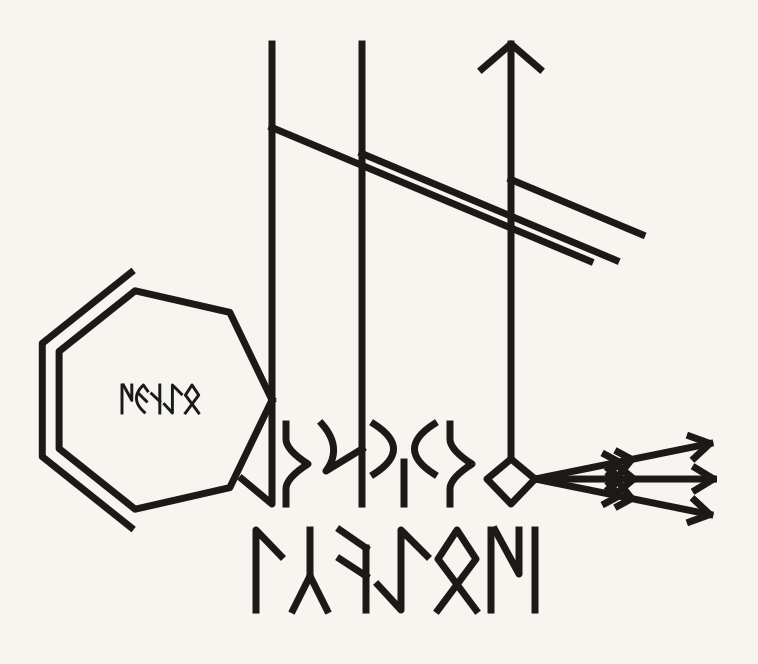
Every tughra shares the same anatomy, while each sultan's name fills it differently:
| Part | What it is |
|---|---|
| Sere | The name itself, written at the base |
| Tuğ | Tall vertical shafts rising from the name |
| Beyze | Loops on the left that give the seal its mass |
| Kol | Arms reaching out to the right |
| Mahlas | A small title or epithet beside the name |
The /tughra page shows real Ottoman tughras, with sources, next to these parts.
Why Orkhon runes instead of Ottoman letters?
Ottoman tughras are written in Arabic script. Using it for my name would have copied a sultan's seal, not made my own. So I used the Orkhon runes, also called the Göktürk alphabet: the first alphabet made for a Turkic language. It's ours, it looks striking, and hardly anyone in the world can read it, which is what makes it special.
The brief I set was simple: inspired by the Ottoman technique, but original, and it must not look like Arabic at the end. One honest note: no Göktürk tughra ever existed. The Göktürks lived centuries before the Ottomans. This is a modern idea that joins two parts of Turkish history, and for me it's about identity, heritage and art all at once.
It started as a logo
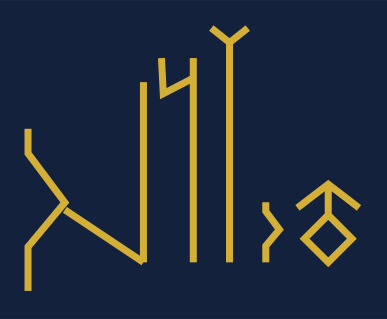
It began with a search for a logo for my personal brand. My first idea was a Göktürk tughra: the first maker built the whole seal out of my name's own letters. Their stems grew into shafts, and one rune stretched into the loop.
- first maker
- stone
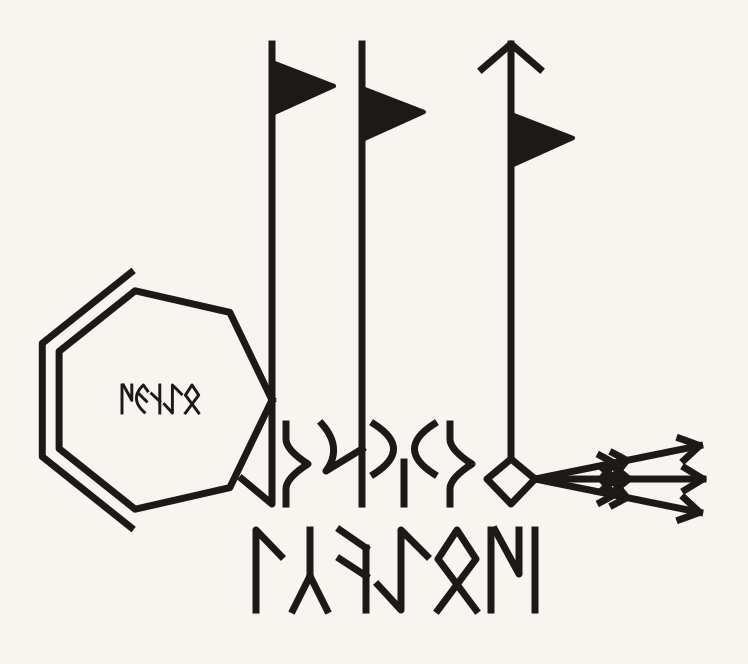
- banner
- seal
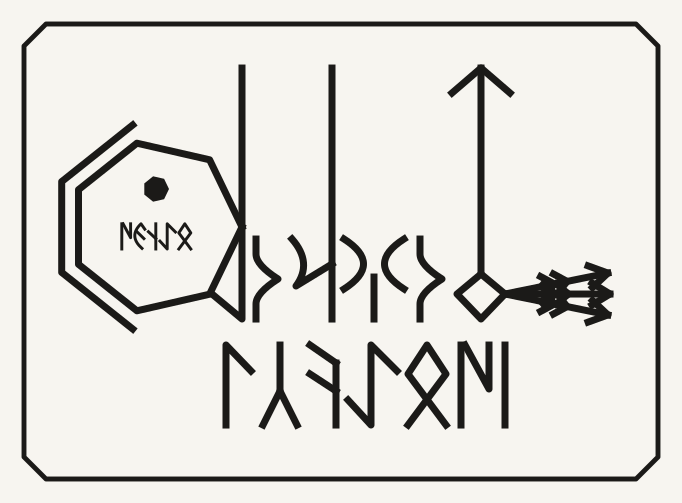
Before drawing anything, I needed my name in runes, so step one was a writer that turns any Turkish or English text into Orkhon letters. Then came the tughra itself, and halfway through I changed my mind about what it was for. It wouldn't be a logo. It would be a seal, a signature like the real Ottoman tughras, and it would replace "Designed by Tugrul Subekci" in the footer. The logo became a separate falcon-and-rune mark.
Why is there a heptagon on the left?
A tughra needs mass on its left side, where the Ottoman calligraphers drew two nested oval loops. Runes are straight strokes, so I needed a geometric shape instead, and it had to be a heptagon. Seven is a sacred number in Turkic tradition: the seven-layered sky (yedi kat gök) and the seven stars of the Big Dipper (Yedigen).
My first version had two nested heptagons, and I didn't like them. Instead, the loop is one heptagon with only its three left edges doubled. That keeps the nested look of the Ottoman loops in a single shape.
What else did I change along the way?
Most of the work was looking at a drawing and saying what was wrong with it:
- Too geometric. Cutting every curve straight looked harsh. The runes keep their natural curves now, which looks better.
- Arms that floated. The arms to the right didn't belong to anything, so every style now grows out of the first letter of the name. There are 11 styles, from three arrows to the seven rays of the sun.
- Too long. Ottoman tughras are almost as tall as they are wide, and mine stretched too far, so I made it compact.
- A motto. The loop holds bengü, "eternal": the Orkhon stelae call themselves bengü taş, eternal stones.
- A choice of tuğ. The tuğ was the horsetail standard of Turkic armies, so each shaft can carry one of 6 kinds, from a simple pennant to a horsetail or a small heptagon on top.
- today
What did people think?
I shared it with my brother and a few friends, and they loved it. There are no analytics worth quoting yet: the share links are brand new.
The seal is also how visitors find the page. There's no menu item for it: if you're curious about the shape in the footer, you click it.
What's next?
I'll seal every project I contribute to with my tughra, where people would normally write "Built by". It's a signature people can recognise, and it carries a story most labels don't.
Write your own name in Orkhon runes on the tughra maker, pick a tuğ and arms, and send the link to someone. The link shows your tughra when you share it.